නාගරික සංවර්ධන අධිකාරිය
நகர அபிவிருத்தி அதிகாரசபை
Urban Development Authority
The Urban Development Authority (UDA) was established in 1978 as the institution responsible for regulating urban development at the national level in Sri Lanka. Accordingly, under the provisions of the Urban Development Authority Act No. 41 of 1978, areas declared by an order of the subject Minister as suitable for development across the entire island are designated as Urban Development Areas. The primary responsibility of this institution is to prepare, implement, and promote integrated plans necessary for the physical, social, economic, and environmental development of such declared areas.
The objective of the Urban Development Authority is to achieve its vision of “Towards a well-planned, protected, and pleasant urbanization” by providing opportunities for the public living in declared Urban Development Areas to gain development benefits through new development projects, thereby enhancing their well-being.
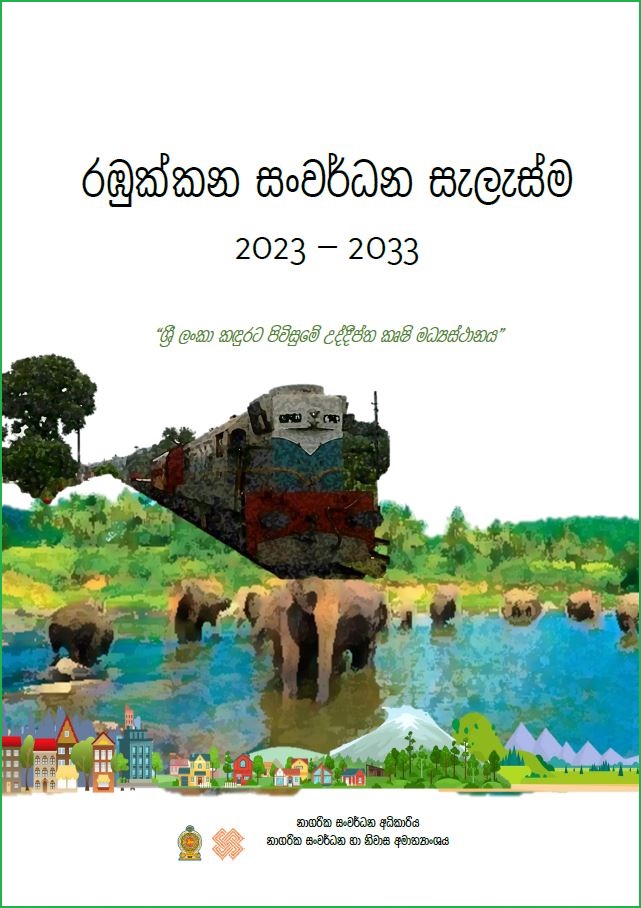
The Rambukkana Urban Development Area was declared as an Urban Development Area by Gazette No. 678/3 dated September 2, 1991. Subsequently, by Gazette No. 1438/18 dated June 28, 2000, it was declared a Tourist Zone. This is the only gazetted Tourist Zone in the Kegalle District of the Sabaragamuwa Province. Later, on August 11, 2000, the entire Rambukkana Pradeshiya Sabha area was declared an Urban Development Area by Gazette No. 1144/25.
Among the above-mentioned Urban Development Areas, the Kegalle District Office of the Urban Development Authority prepared a development plan only for the Rambukkana Urban Development Area, which covers 3.8 square kilometers. This plan was in effect from 2012 to 2020. However, since this plan was limited only to the Rambukkana Urban Development Area and did not fully utilize the development potential of the wider area, steps were taken to prepare a new development plan covering the entire Rambukkana Pradeshiya Sabha area.
The new development plan, which will be implemented during the period 2023–2033, introduces development strategies and guidelines aimed at further developing the main economic strengths of the area, namely agriculture and tourism. It also aims to economically empower the local community and ensure that the natural environment is utilized sustainably for development through proper conservation measures.